Reading and self-expression as liberation
Unorthodox: The Scandalous Rejection of My Hasidic RootsReading and self-expression as liberation describes the movement from Devorah’s concealed pursuit of knowledge to her public work as a writer. Books first offer an imaginative life beyond the limits of her surroundings; later, writing lets her make private experience shareable without surrendering control over it. The path is not simply from silence to speech: it runs through secrecy, the loss of cherished books, anonymous publication, and a memoir that turns a divided life into a story she can claim.
Reading as a private freedom
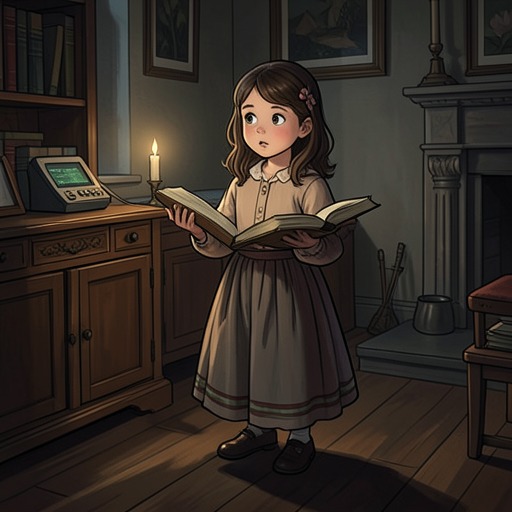
As a child, Devorah covets the privilege of reading and risks punishment to gain knowledge. Looking back as an adult, she remembers the authors’ apparent freedom to put their innermost thoughts on paper, a freedom that contrasts with her own expectation that she must keep secrets. Reading matters not only for what books contain but for the model of self-expression they embody: a person can think, speak, and leave a record of those thoughts.
Her later account identifies a gradual change in how she responds to authority. At the time, she does not recognize that she has lost her innocence; only years afterward does she understand that a particular moment marked her movement away from accepting authority for its own sake and toward drawing her own conclusions. The new independence of judgment is accompanied by conflict. Her thoughts and the teachings she absorbs pull against one another, and the tension sometimes shows through the composed exterior others expect her to maintain. In retrospect, intellectual freedom begins before open resistance: it takes shape in the difference between what she is taught and what she has begun to think.
Books lost, books remembered
After Eli returns home, Devorah learns that his mother has instructed him to stop her from borrowing library books. Her reading is treated as part of the trouble in the marriage, and she concludes that access to books would again require the secrecy she used in childhood. She feels too tired to keep fighting for these small freedoms. The change is painful partly because she had once been able to leave books openly on the table in her own home, without hiding evidence of the pastime she loved.
She gathers her books into a large plastic garbage bag for Eli to take to the Dumpster outside his office. Among them are Anne of Green Gables, Watership Down, and Jane Eyre. Holding her worn copy of Anne of Green Gables, she recalls why the lively, mischievous heroine mattered to her: Anne receives lasting love despite being unconventional, something Devorah had hoped for in her own marriage. That memory sharpens the loss. The books are not merely possessions; they hold images of the acceptance and imaginative possibility she wanted. Devorah’s reflection also revises her understanding of Eli’s promise to accept her: what she had hoped would mean love now seems to have meant pressure to bend to his wishes and conform.
An anonymous public voice
Years later, the volume of thoughts she can no longer keep inside makes writing feel necessary. Devorah starts an online journal under the title Hasidic Feminist and takes care that readers cannot trace it to her. Its entries draw on her work at Sarah Lawrence College and on feminist philosophy, theater, and writing classes. The blog gives her a way to speak while preserving a protective boundary between her public words and her identifiable life.
She begins by writing about the difficulty of consummating her marriage, an experience she had not previously disclosed. A woman from Williamsburg has contacted her about the same problem affecting the woman’s newly married daughter, after receiving Devorah’s number from Aunt Chaya. The call unsettles Devorah’s belief that her own experience is uniquely abnormal. Although she does not yet understand fully what happened to her, she offers the woman what advice she can. Writing about the subject online then brings responses from rebellious Hasids, former Hasids, modern Orthodox Jews, and gentile readers. Some doubt that a girl could have gone through adolescence without noticing her vagina; others express sympathy or describe comparable experiences. The readers debate among themselves, turning the blog into a forum rather than a solitary journal.
Anonymity shapes the freedom Devorah finds there. She feels at the center of a conversation while remaining behind the computer screen, unseen and not answerable in person to the people reading. Their questions also expose the practical stakes of leaving: readers warn that a woman who is no longer religious may not be allowed to keep her child, and one commenter claims that this has never been done. The blog thus joins self-expression to uncertainty. Speaking publicly brings recognition and connection, but it also makes the future she is considering more sharply visible.
From hidden writing to authorship
At the library, Devorah thinks about the books she once risked so much to read and about the authors who could state their minds openly. She is tired of concealing her true self and of pretending to piety while reproaching herself for doubt. Her ambition is no longer only to read the writers on the shelves; she wants to stand among them, with the right to present herself truthfully. The library becomes a measure of the distance between the child who coveted access to books and the adult who hopes to make work of her own.
Polly circulates the blog among publishing contacts, and a literary agent emails Devorah. The possibility of publication overwhelms her, bringing both excitement and fear that the opportunity might disappear. The shift is consequential: writing that began as a private, untraceable record has reached people able to help carry it into print. The account does not present that transition as effortless. Devorah wonders how she can prove herself worthy, even as she pursues the connection.
After the car accident at midnight, when the date changes to September 9, 2009, Devorah interprets survival as a dividing point in her life. The following day, she signs a contract to write a memoir. She describes the project as a final remembrance of a person who no longer exists, because her two identities have separated. The memoir gives the former self a last account while allowing the writer to speak from beyond that identity. This is not simple erasure: the book is at once an ending and a deliberate act of remembrance.
Telling the past without surrendering it
The memoir’s claim to tell a life is qualified by the book’s own disclosure that names and identifying characteristics have been changed and that some incidents have been compressed, consolidated, or reordered to protect people and maintain continuity. Dialogue is described as an approximation of conversations recalled by the narrator. That disclosure makes the act of self-expression more complex than unfiltered confession: the narrative offers a shaped account, with privacy and recollection acknowledged as part of its form.
After leaving, Devorah first teaches Yitzy English. They read books together and watch Sesame Street; he learns quickly, and she is grateful to be able to do this while he is young. In their new life, reading is no longer only a route toward Devorah’s own independence but also something she actively shares with her child. The act links literacy to their developing relationship and to the future she is making for him.
Devorah’s eventual freedom does not require her to discard the past. She understands the improbable character of her journey and says that she has freed herself from her past without letting it go. The books, the years of secrecy, the blog, and the memoir belong to one continuing process: gaining the ability to read, think, and write without treating concealment as the only available protection. Self-expression becomes liberating not because it makes every consequence disappear, but because Devorah can turn experience into a story that she chooses to tell.